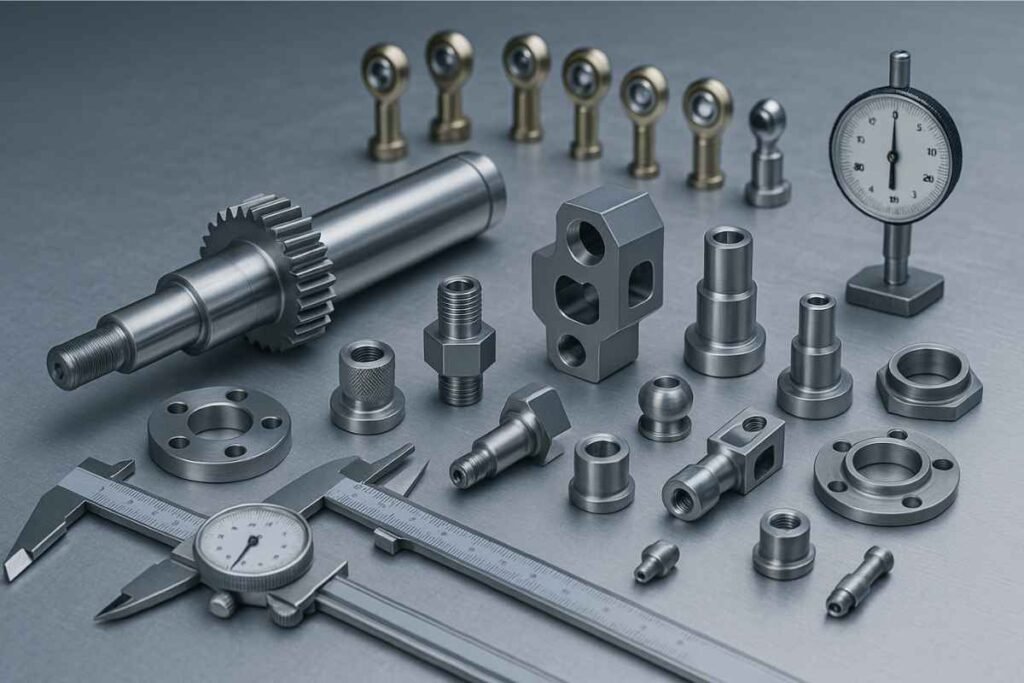
Introduction: Why Your CNC Machining Partner Matters More Than Ever
Whether you’re an automotive OEM, a robotics startup, or an industrial manufacturer, the CNC machining partner you choose will directly influence your product’s performance, reliability, and commercial viability. A precision component is only as good as the process behind it; even small deviations in tolerances or surface finish can lead to system failure, warranty costs, or loss of customer trust.
For many founders and procurement heads who are evaluating machining suppliers for the first time, the process can feel overwhelming. Machine capability charts, material grades, QC jargon, and pricing can look similar across vendors — but the differences behind the scenes are enormous.
This guide helps you navigate the criteria that truly matter when choosing the right CNC machining partner — with real, experience-backed insights from Ravilla Precision Tech, one of India’s emerging precision engineering manufacturers serving automotive, robotics, industrial, and export markets.
1. Start by Evaluating the Supplier’s Core CNC Capabilities
A CNC machining supplier must have the right machinery to match your design requirements. This is your first line of assessment.
1.1 Machine Types & Range
A capable partner should operate a mix of:
- CNC Turning Centers
- Vertical Machining Centers (VMCs)
- Automated tool changers
- Precision grinders
- CMM inspection systems
If you require tight tolerances (±10–20 microns), check that their machines are well-maintained and relatively modern.
Why Ravilla Stands Out:
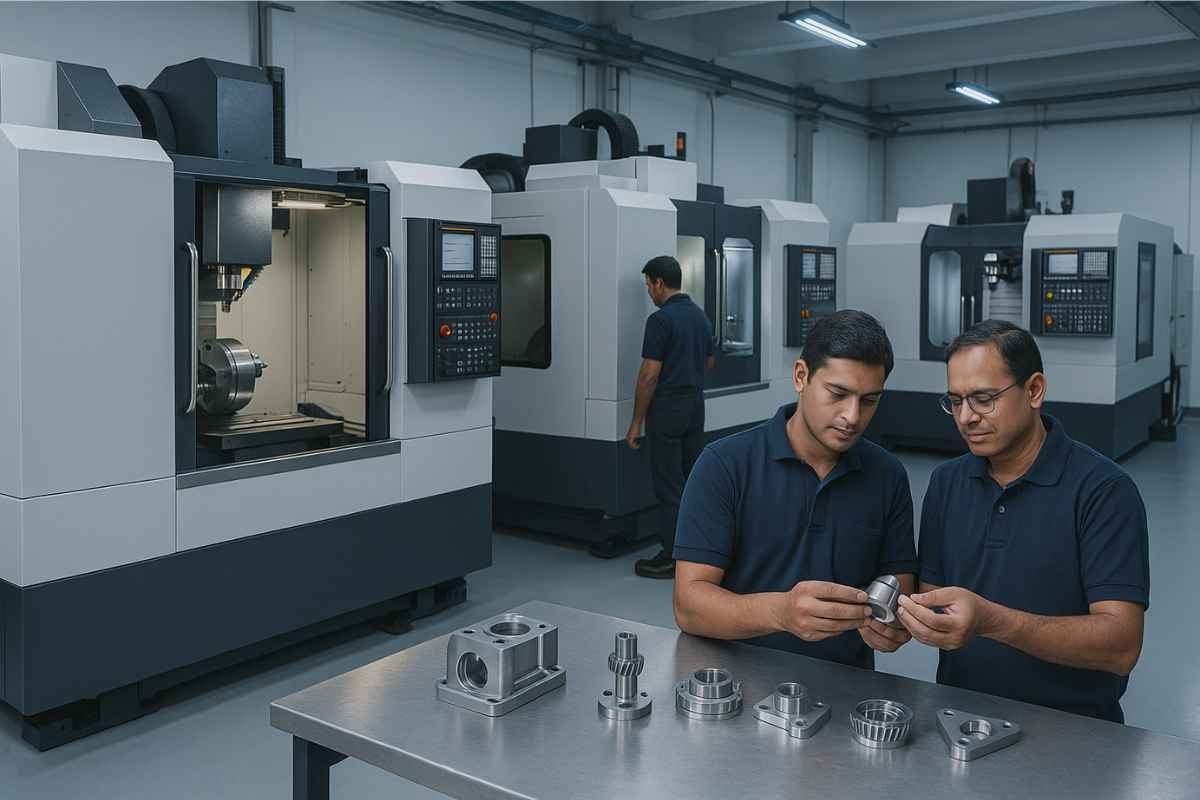
Ravilla Precision Tech runs a diversified CNC setup designed specifically to support high-volume, tight-tolerance components for Tier-1 automotive and robotics companies. The company’s investment in advanced tooling allows them to deliver precision at scale.
1.2 Capacity for Volume and Scalability
Ask:
- Can the supplier handle pilot runs and mass production?
- Do they offer sample batches and prototyping?
- Can they support future scale-up demands?
A strong CNC partner should grow with your business, not hold it back.
2. Check Their Expertise With Materials
Component performance often hinges on material knowledge. A capable supplier must understand how different materials behave under machining conditions.
Common Materials CNC Shops Should Excel At
- Mild steel and carbon steel
- Aluminum alloys (e.g., 6061, 7075)
- Brass and copper
- Stainless steels
- Engineering plastics for specialized applications
Incorrect feeds, speeds, or tooling choices can ruin even the best material.
Why Ravilla Stands Out:
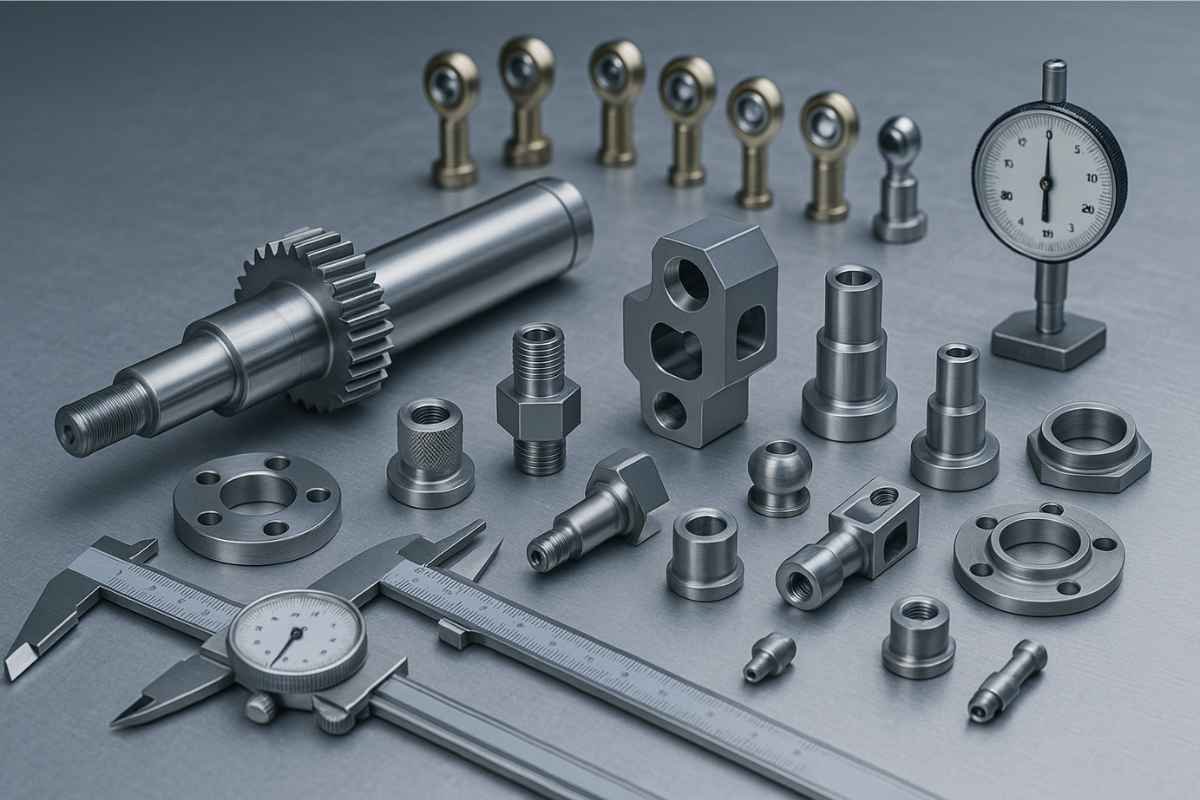
Ravilla Precision Tech has hands-on experience machining automotive-grade steels, EV drivetrain materials, high-strength robotics alloys, and precision electrical connector materials such as brass and aluminum. Their material expertise ensures consistency across small and large batches.
3. Tolerance Capability: The Real Differentiator
For decision-makers new to machining, tolerance is the single biggest indicator of supplier capability.
What to Look For
- Ability to hold ±10–30 microns consistently
- Capable of producing uniform surface finishes (Ra 0.2–1.6 depending on need)
- Dimensional consistency across batches
- Clear documentation and a strong QC team
If you’re producing automotive, aerospace, or robotics components, tolerance consistency isn’t optional — it’s mandatory.
Why Ravilla Stands Out:
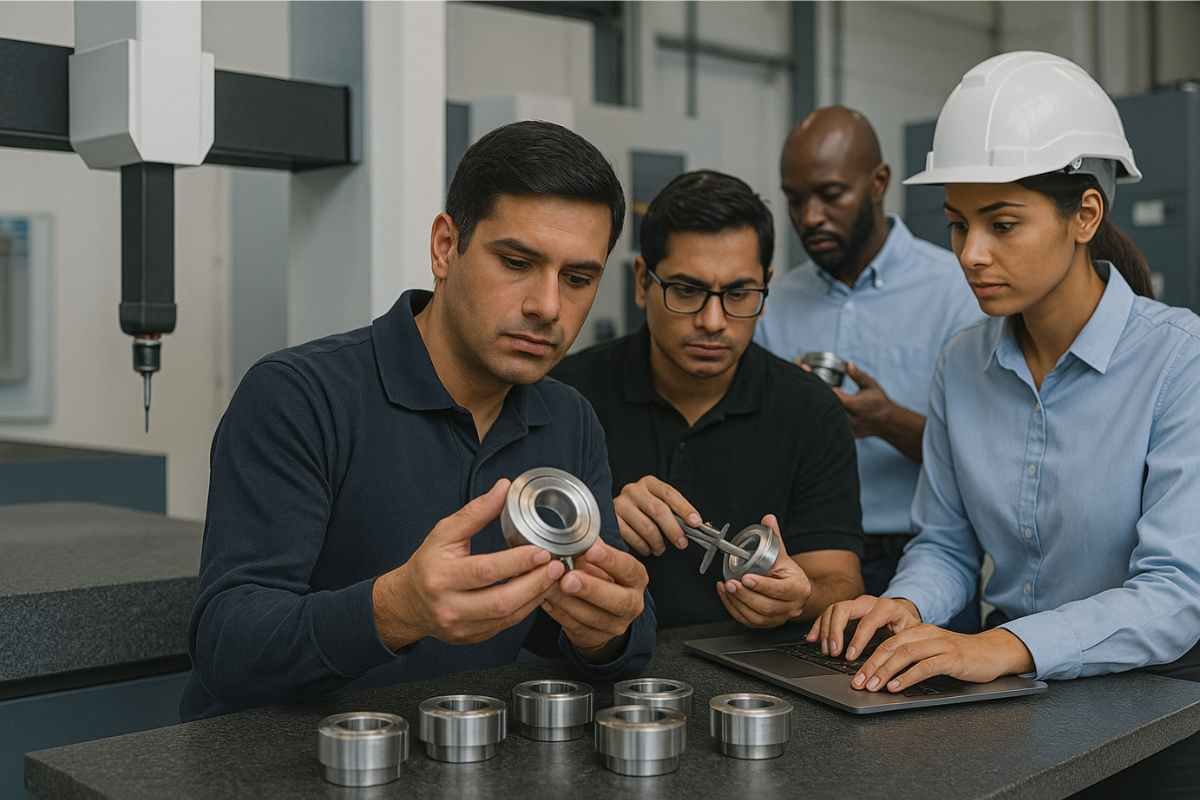
Ravilla uses CMM-based inspection, calibrated gauges, and standardized machining workflows to maintain tight tolerances across large production volumes. Their track record with Tier-1 automotive suppliers like TVS demonstrates their ability to deliver repeatability and precision.
4. Evaluate Their Quality Control Processes
4.1 In-Process Quality Checks
A serious CNC manufacturer uses:
- First article inspection (FAI)
- In-process gauging
- Tool offset monitoring
- Runout and concentricity checks
4.2 Final Quality Inspection
They should have:
- CMM machines
- Surface finish testers
- Profile projectors
- Go/No-Go gauges
Why QC Matters:
If your supplier performs weak QC, you will eventually face breakdowns, warranty issues, and unhappy customers — even if the components look fine at first glance.
Why Ravilla Stands Out:
Ravilla Precision Tech follows a layered QC system: operator checks → supervisor checks → dedicated QC review — ensuring every part shipped meets global specifications.
5. Ask About Delivery Reliability & Lead Time Discipline
Reliable delivery is one of the strongest indicators of manufacturing maturity.
Questions to Ask
- Do they maintain realistic lead times?
- Do they buffer production for emergencies?
- How do they handle urgent orders?
- Do they give weekly progress updates?
An unreliable supplier can cripple your entire production schedule.
Why Ravilla Stands Out:
Ravilla has built a reputation for fast, reliable, and transparent delivery schedules, supporting OEMs that operate on strict assembly-line timelines.
6. Assess Their Communication & Technical Support
A good CNC partner should:
- Provide clear, straightforward communication
- Understand technical drawings
- Offer manufacturability suggestions
- Help resolve design challenges
- Provide cost-saving ideas without compromising quality
Why Ravilla Stands Out:
Their engineering team works directly with OEM R&D teams, supporting them during design iterations, prototyping, reverse engineering, and process optimization. This makes Ravilla not just a supplier — but a technical collaborator.
7. Understand Their Documentation Standards
Proper documentation is essential, especially if you’re in:
- Automotive (PPAP, APQP, SPC)
- Robotics (traceability)
- Aerospace (material and dimensional reports)
- Export (QC certificates, packing lists)
If a supplier lacks documentation discipline, it’s a red flag.
Ravilla’s Documentation Practice:
They maintain measurement reports, inspection logs, material traceability, and quality certificates for every client — a key requirement for export markets.
8. Compare Price-to-Performance, Not Just Price
Choosing the cheapest CNC supplier is a guaranteed path to:
- inconsistent quality
- rejections
- assembly issues
- production delays
- expensive redesigns
- hidden costs
Procurement leaders today evaluate value, not raw price.
A strong CNC partner provides:
- long-term reliability
- predictable quality
- better throughput
- reduced total cost of ownership (TCO)
Ravilla’s Value Advantage:
By delivering global-quality precision at competitive Indian pricing, Ravilla offers an unbeatable cost-to-quality ratio — especially for automotive, EV, and robotics components.
9. Inspect or Request Photos of the Facility
Before finalizing a supplier, ask for:
- Factory photos
- Machine list
- QC lab visuals
- Sample components
- Team introduction
These help decision-makers quickly understand a shop’s real capabilities.
Ravilla encourages factory visits and transparency as part of their partnership approach.
10. Check Customer Base & Proven Track Record
Working with proven clients — especially OEMs or engineering companies — is one of the strongest legitimacy signals.
Ravilla’s Track Record Includes:
- Tier-2 supply to TVS
- Precision parts for robotics and automation companies
- High-accuracy components for industrial and electrical OEMs
- Export-ready components for ASEAN and European markets
These references help build trust and demonstrate experience.
Conclusion: Strong CNC Partners Build Strong Products
Choosing the right CNC machining partner will define the performance, longevity, and reliability of your product.
Look for:
- technical capability
- material expertise
- tight tolerances
- transparent QC
- reliable delivery
- professional communication
- and a proven track record
A strong partner is not just a vendor — it’s a competitive advantage.
If you’re looking for a trusted precision machining partner who combines world-class accuracy with transparency and consistency, Ravilla Precision Tech is ready to support your next project.
📞 Call to Action
Ready to work with a dependable CNC machining partner?
Contact Ravilla Precision Tech today at +91 80731 05217 to discuss your requirements, request a quote, or schedule a facility visit.
Precision begins with the right partnership — let’s build that together.